
The people of Sri Lanka, Bangladesh, Indonesia, & Nepal have written history. And we, Pakistanis? We are just reading history!
Around the world, the new generation, Gen Z (also known as the mobile phone generation), has come out like a storm. It is crushing whatever obstacle comes in its way, including toppling governments & changing the destinies of their countries.
And, in Pakistan? The country where everything that is enough to bring a revolution in any nation has happened in the last few years: economic destruction, political crisis, judicial battles, natural disasters, corruption, looting, misery, unrest. What has not happened?
But the result? A few days of noise and then silence, a graveyard-like silence!
But why? Why don’t the youth of Pakistan come out on the streets? This is the question that is in everyone’s mind today. Indeed, it must come to your mind (as a Pakistani) when you see a heavy electricity bill, when you don’t get a job, when you feel helpless in front of the system. You must think why doesn’t everything change & why doesn’t a revolution come.
In this article, I have done a post-mortem of the nation’s psyche and mentioned the five reasons that don’t let Pakistanis unite. At the end of the article, I have also mentioned the cons of a revolution and draw your attention to that great fear which stands as a wall in the way of every revolution in Pakistan!

Reason #1 – The Messiah Complex
See, a revolution is not magic. It doesn’t come from someone’s speech. It demands blood, sacrifice, and patience!
So if you ask me why no revolution comes to Pakistan, the first and biggest reason is that we actually don’t even want a revolution. Yes, you read it right. We Pakistanis don’t want the hard work of a revolution; instead, we want a messiah, a savior.
This is a very dangerous virus that is stuck to our national psyche. You can call it “The Messiah Complex”.
Now what is this? It’s that we can’t do anything ourselves to change our fate and get us out of every difficulty; rather, someone will descend from the sky (a hero/messiah) who will wave a magic wand as soon as he arrives, and everything will be fine. We are not ready to make the sacrifices & do the hard work required to change the system. We believe some messiah will do all this work.
We have never tried to strengthen institutions; alternatively, we have always worshiped individuals.
If you don’t believe me, then let me give you the proof from our history (I love history btw, so yeah it’s necessary to include it).
When Ayub Khan came into power, he showed us a golden dream of progress, and in return, he strangled democracy. And even after being deceived, we didn’t understand till this day; in contrast, we just say that a time like Ayub Khan’s never came again in Pakistan. This proves that we don’t just have a messiah complex, but we also have Stockholm syndrome! (Do a Google search if you don’t know what Stockholm syndrome means 🙂)
Well, then Zulfikar Ali Bhutto came. He was like a magician; his words had such magic that millions of people followed him. People used to say that the messiah had come who would give us “roti, kapra aur makaan” (food, clothing, and shelter). What was the result? Nothing, other than a slogan: “Kal bhi Bhutto zinda tha, aaj bhi Bhutto zinda hai”.
Then Zia-ul-Haq came, and he used religion as a weapon. He said that he’ll bring “Nizam-e-Mustafa” (the system of the Prophet) and once again people stood behind him, thinking that success in this world and the hereafter lies behind this new messiah.
A great example of our messiah complex was Altaf Hussain. His party’s unofficial slogan was: We don’t need a destination, we need a leader. Like, literally, for serious, think what kind of movement would it be that runs on this ideology.
And we are now seeing the ultra pro max version of this messiah complex. The most modern, the most powerful example is: Imran Khan. Someone who fits every definition of a messiah. With a charismatic personality, people say he is honest, brave, and even has a slogan (Naya Pakistan, New Pakistan). An entire generation (especially the young generation) pinned all its hopes, all its dreams, and expectations on Imran Khan (only on Imran Khan). His movement was not the movement of Tehreek-e-Insaf; in reality, it was the movement of “Imran Khan”.
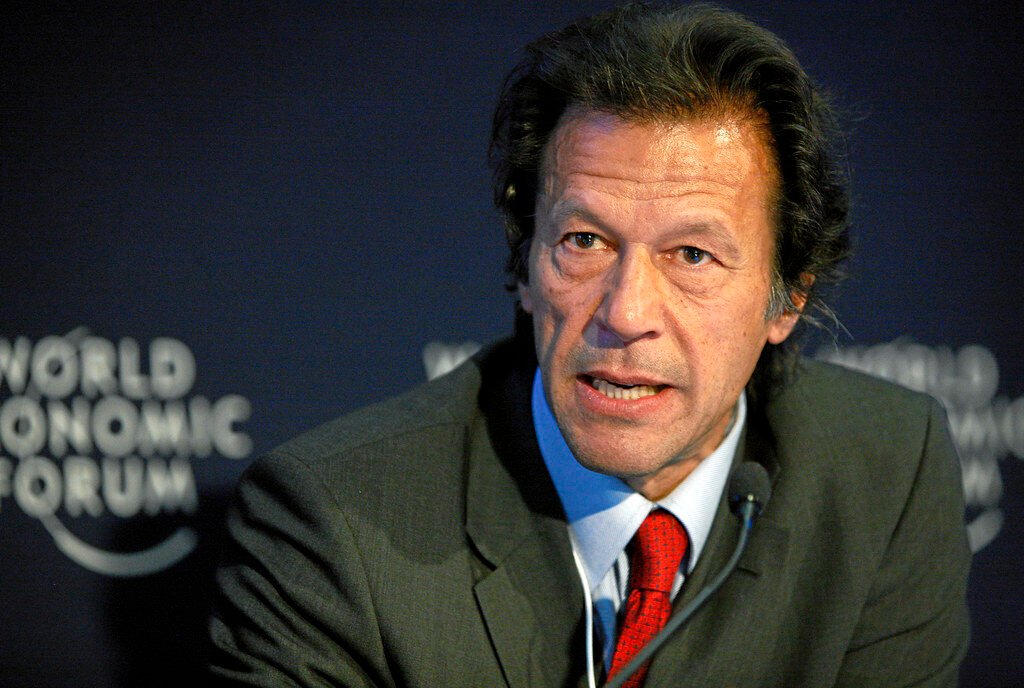
What was the result? The day the captain was arrested, the day the messiah was removed from the scene, the movement became an orphan! Millions of young people, ready to do anything on Khan’s signal, came on the streets for a few days and then went home!
Why? Because revolution is a responsibility and (with all due respect) we are an irresponsible nation! We don’t want to work hard. We don’t want to sit on the roads. We don’t want to understand the complexities of the system. We just want a hero whose posters we can put on our cars, whose “prisoner number” we can put on our shirts, get Peshawari chappals made with the number 804, write his slogan on social media, and then sit back and wait for everything to change for the revolution to come.
And when the messiah fails (or is made to fail), then we’ll simply wait for the next messiah. Because we don’t need a destination, we need a leader.
Now, in whichever countries a revolution has recently come, you can look at them (Bangladesh, Sri Lanka, Indonesia, Nepal); there, the people brought the revolution, not a leader. The people, who rose against the system, not for one person, but for themselves.
This is our first and biggest chain, an imaginary chain that stops us from thinking, uniting, and fighting our own battle. However, this is not the only chain.
Reason #2 – The Deep State
If we free ourselves from the messiah complex and come to the streets to change the system, who will we be up against? In Bangladesh, the people’s target was very clear: Sheikh Hasina’s government and her corrupt system. In Sri Lanka, it was the Rajapaksa family. In Nepal, the target was the corrupt official clique, but in Pakistan, who is the real target of the revolution?
This story is not simple at all, because the competition is with an unseen power, a power that is not visible and yet is visible. Pakistan has a tragedy: in our history, the real center of power has never been the parliament. This is a harsh reality, a bitter truth that we all know, but are just afraid to say it. Within just a decade of Pakistan’s creation, a parallel government, a deep state, an establishment, whatever name you give it, came into being. It is the one that has both made and broken governments. It has both broken and united political parties. This is the “steel frame” of our system on which our country stands. Nonetheless, is this the only villain that doesn’t let democracy function? Or is there another, more complicated side to this picture?
I believe, and even many analysts raise this question too, that Pakistan’s political system is so hollow, politicians so irresponsible, and society so divided that if this “steel frame” is suddenly removed, the entire building will collapse. Let me explain the structure.
This steel frame considers itself the necessary protector of Pakistan and plays three major roles.
First: the guardian of the ‘red lines’ of national security. Our nuclear program, our foreign policy, especially relations with India, the Kashmir issue, the Indus Water Treaty, and projects like CPEC- these are our “red lines” on which there can be no compromise. It is said that politicians can put these interests at stake for their temporary political gain. Therefore, a permanent, non-political force is needed to ensure that these red lines are never crossed.
Second: the role of a ‘referee’ in political chaos. In the 90s, the People’s Party and the Muslim League-N were busy toppling each other’s governments and putting each other’s leaders in jail. Democracy returned to Pakistan after a long time, but their childish games were not ending. They brought the country close to a civil war; then it was this “steel frame” that came in as a “referee”, and stopped the game from being completely destroyed. This process was undemocratic, but according to some people, it was perhaps necessary.
Third: the guarantor of policy continuity. See, governments change every five years in our country (no government has survived 5 years, lol), but foreign policy, national security, and major economic projects need continuity. Only this steel frame ensures it; no one else.
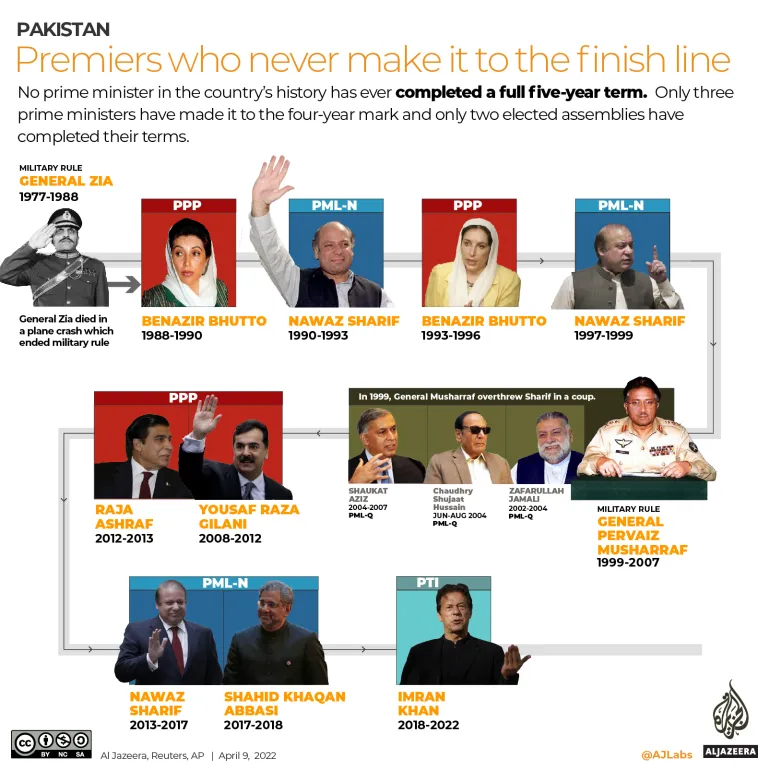
So this is the complex situation that a system which, on one hand, strangles democracy, and on the other hand, perhaps also saves the country from complete chaos.
You will ask what all this has to do with revolution? It has, absolutely, a very deep connection. In Bangladesh or Nepal, the people knew that if they toppled the government, they would win. But the people of Pakistan know they have a dilemma: no matter which politician they vote out, the real steel frame will remain where it is. And this feeling that no matter what the people do, nothing will change, and the “real power is elsewhere”- this kills the spirit of revolution before it is even born.
Reason #3 – Divided Nation
A revolution requires one thing: national unity, a common pain, a common enemy. And we, we are a nation that has no single common enemy, because we ourselves are each other’s biggest enemies.
Let’s look again at those countries where people came out on the streets.
Bangladesh: the movement there was started by students, and on a single-point agenda, against the quota system in jobs. This was a pain point that everyone knew regardless of their region, and everyone united. Subsequently, this movement became a national movement and uprooted a system of oppression and tyranny that had existed for decades.
At the time of me writing this article, there are active protests in India. The goal of the protests is to demand government accountability on the education system and the resignation of the Education Minister. It all started with one thing: the NEET paper leak.
Let’s go back a little further: in 2016, people in Turkey lay down in front of tanks. Why? Because their fight was not for a politician or a party, but to save their democratic identity, an identity on which the majority of the country agreed. You can pick any movement; you will find this thing common in it: a great national identity & a common cause that gathered millions of people under one slogan, that too without any leader.
In all these countries, there is not much diversity (except India); most people are of the same language, the same sect, and the same culture. That’s why national security is not at risk; there is no existential threat that if the revolution fails, the country’s security will be at stake!
But look at Pakistan, a country where the language changes every 100 kilometers; culture, food, clothing, even the way of looking at history changes. We are not one country, but a collection of several countries living together on the world map. And a dangerous consequence of this diversity is that we have no common “national pain”. We are all in pain, but our pains are different, and our enemies are also different! Let’s examine.
The pain of the youth of Balochistan is missing persons and lack of control over natural resources, so for them the oppressor is the “establishment”. But this is not the problem of Sindh: their problem is water scarcity and feudalism. For a Sindhi, the oppressor is the “landlord of Punjab”. If you look at Punjab, the pain of the people there is rising inflation and taxes, so for them, the oppressor is perhaps the “corrupt politician”. The pains of a citizen of Karachi are countless, so the oppressor for them is the feudal-style government of Sindh.
Therefore, how can we agree on a common enemy when we consider each other our enemy?
Furthermore, the actual elites have designed this system in a way that we keep fighting with each other. Not only that, but we are also busy protesting for these political parties. Our elite class uses this division as a weapon to make us fight each other. For example, Sindhi against Muhajir, Baloch against Punjabi; they scare everyone from everyone and divide us politically.
This is why a PTI supporter will never join a Jamaat-e-Islami protest against inflation, even if this is his biggest pain point. A PML-N voter will never be part of PTI’s ‘Haqeeqi Azadi’ (real freedom) march, even if he himself is the most fed up with this system. Our pain is actually one, but our loyalties are different. We hate each other so much that we don’t get time to hate this system, and this is what has brought us to this state.
Our diversity, which should have been our greatest strength, has become our greatest weakness. And this is the poison, or rather the anti-venom that kills every germ of revolution before it is born. Moreover, behind our division, behind not believing in each other, there is also a very deep, historical fear hidden. However, I will tell you about that at the end; for now, let’s move on to the next chain that we cannot see, but with each passing day, every moment, we are being shackled by it.
Reason #4 – Empty Stomachs, Empty Streets
That is: our economic compulsion. In simple words, our fight for two square meals a day.
Revolution is a luxury. It is started by people who have the time and energy to think, plan, and take to the streets, or they are so desperate that they have nothing to lose. History is a witness that every major revolution was started by the middle class and fueled by the lower class. However, the biggest tragedy of Pakistan is that our middle class is either disappearing or fighting for its survival.
Pakistan’s national poverty rate is 28.9%, which means approximately 70 million people live below the poverty line. Source: Dawn
See, an ordinary person in Pakistan, who wakes up at six in the morning to go to work, works hard for ten hours, gets abused by the boss at work, gets humiliated in traffic coming and going, and comes home tired at night, just so he can feed his children two meals a day. Does he have enough courage & energy left to sit in a protest for revolution at night? He will be worried that if he doesn’t go to work today, his child will cry for milk tomorrow. He is afraid that if the police arrest him at the protest, then who will bring medicine for his elderly parents?
This is the ruthless reality, the harsh reality, that millions of Pakistanis face every day. Understand this as a war between “empty stomachs and high ideals”, and the sad thing is that in such a war, the empty stomach always wins.
Now you will say that the economic conditions in Sri Lanka, Bangladesh, Indonesia, and Nepal were not good either. They were also in a bad state (which is why the people came out). Absolutely they did, but after reaching that point, they had nothing left to lose. Whereas, in Pakistan, one thing has been done very well. The elite have designed the system very cleverly. They don’t let us become so poor that we resort to rebellion, but they also don’t let us become so rich that we can sit peacefully and think against them. They just keep us alive, hanging between hope and despair.
By putting the middle class in this dilemma, they make them afraid. They fear that if economic activities stop due to a revolutionary movement, the wheel jams, or the country gets close to bankruptcy, they will be the ones to suffer the most. Their job will be gone, and their small savings will be finished, so they tolerate the current bad situation out of fear of the worst to come. They say, “the system is bad, but at least it’s running”. This is the economic compulsion that pours water on every flame of revolution. It doesn’t make us brave but cautious, not revolutionary but survivalist.
But wait a minute. There is one class that has energy, time, and a lot of anger: our young generation (Gen Z). So why don’t they (we, Gen Z) come out on the streets?
Reason #5 – Digital Illusion
Gen Z (the generation born between 1997 and 2012) is not afraid like the previous ones. They/we are well-informed, ask questions, and above all, have a weapon in our hands that no one had before: Social media.
We can create a storm on Twitter in just a few hours. We can make or break any narrative on Facebook. We can show the truth on YouTube and TikTok that the mainstream media hides. It seems Gen Z has all the ingredients to bring a revolution: anger, awareness, and a weapon! Our anger is not just anger; it’s digital anger.
From Indonesia to Bangladesh, from Sri Lanka to Nepal, this generation brought revolution everywhere. But here? In Pakistan? Where does our Gen Z’s digital anger go? It starts with the #FreeImranKhan trend and dies 24 hours later. It stays alive until the Facebook DP is turned black and ends the next morning. It gets millions of views in the form of a Twitter post, and then it ends.
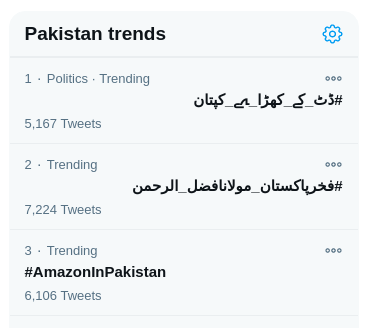
This creates a new question for us: Is it possible that our digital anger (this clicktivism) has taken the place of real action? Is it possible that by cursing the government on Twitter or “exposing” the system in a Facebook post means our duty is done? This is the new and very dangerous trap. We have found a digital safety valve to vent our anger. “Come, curse the system here on Twitter, write against it on Facebook, expose it on YouTube and vent all your frustration, just don’t come out on the streets”.
We think we are bringing a revolution with thousands of retweets, whereas in reality, we are just repeating each other’s words in our own echo chamber. Now the question remains the same: will Pakistan’s Gen Z bring a revolution? It can; it has the power, the courage, and the technology that no generation in history had. However, for that, it has to come out of this digital mirage. We have to turn clicks into steps and trends into a movement. And above all, we have to understand that a revolution doesn’t happen on a phone screen; it happens on the streets. (by “it”, I’m referring to Gen Z)
The Fear
So these are the chains:
- The chain of the Messiah complex
- The chain of the steel frame
- The chain of our own internal division
- The heavy chain of economic compulsion
- And the slightly modern and very strong chain of the digital mirage
All these reasons are realities, but behind all of them, there is a fear hidden, that deep fear that stands as a wall in the way of every Pakistani revolution.
That fear is of 1971.
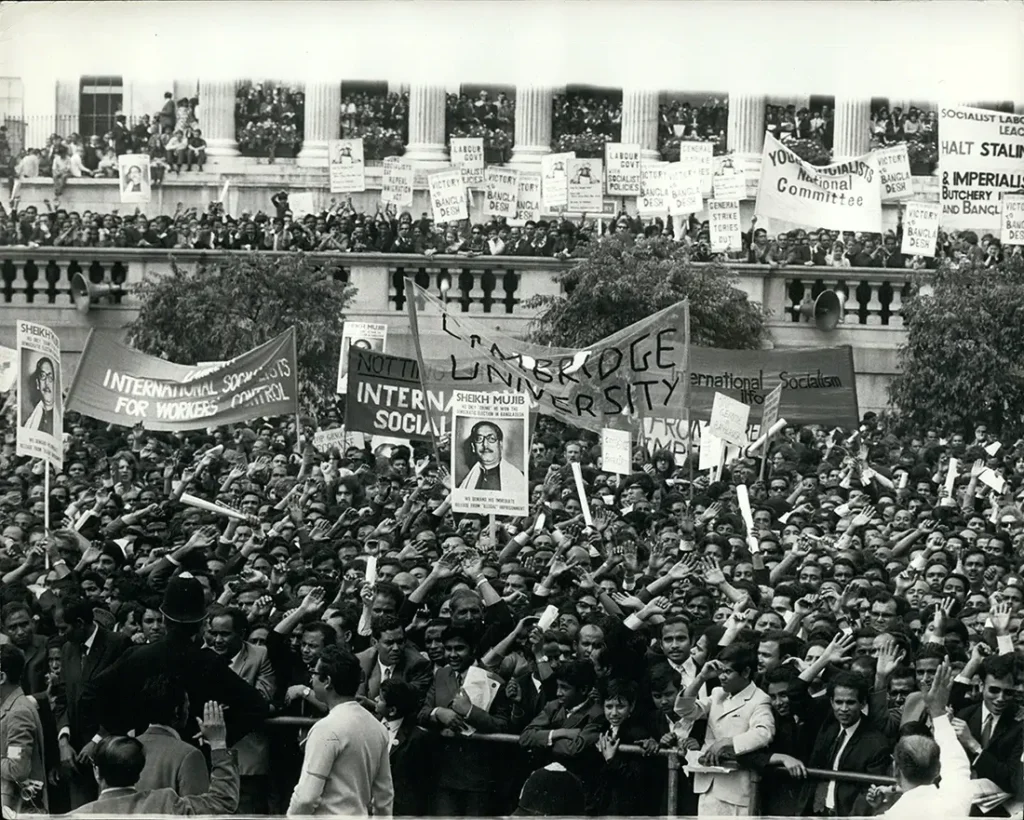
The national tragedy that taught us a lesson, that has instilled a fear in our minds to this day, that whenever the people clash with the system for their democratic rights, the result will only be the breaking of the country. This has become our “red line”. An unseen line that our soul trembles to even think of crossing. And our elite has used this fear as a weapon for the last 50 years.
Whenever a major public movement rises, whenever the people get close to challenging the system, a narrative is immediately created: “National security is in danger”, “Anti-state elements are taking advantage”, “Another 1971 is about to happen”.
We get scared upon hearing this; therefore, we take a step back. The revolutionary inside us dies, and the fearful citizen awakens. We think that we should tolerate this corrupt democracy, this inflation, this unemployment, because its alternative is perhaps complete destruction, perhaps civil war, and perhaps the breaking of the country.
How did a revolution come in Bangladesh, in Nepal, in Sri Lanka? Because the youth there had no such ghost behind them, no historical baggage, they were writing a new history, while our feet are still tied with this heavy chain of history. We are forced to live in a broken, dilapidated building because we are afraid that if we try to fix it, we might get buried under the rubble ourselves.
This is not just the fear of the country’s breaking. This is the fear that if we try to tear down this corrupt and oppressive system, the new system that comes will be even worse. This is the fear of becoming a “Failed State”. This is the fear of becoming Syria, Libya, or Iraq. And this is the fear that tells us: “Whatever is, as it is, accept it, because it can get worse”.
So does this mean that a revolution will never come to Pakistan? Perhaps yes! Perhaps the kind of bloody revolution that we see in other countries will never come to Pakistan. Probably because Pakistan doesn’t need that revolution, that blocks roads and burns buildings, but a revolution that frees minds. A revolution:
- that takes us out of the messiah complex and teaches us the importance of institutions
- that takes us out of political and ethnic divisions and makes us recognize our common enemy
- that teaches us who is our real enemy
- that frees us from the fear of 1971 and assures us that a country of 250 million people (a nuclear nation) can never break
The day this mental revolution comes, the day we recognize our real power, understand our common pain, and defeat our internal fear, that day perhaps we won’t even need to come out on the streets. That day, the revolution will come on its own.
Thus, the real question is not “why doesn’t a revolution come?” The real question is “when will we become a nation that doesn’t need a bloody revolution?”
My Thoughts
After writing this article, I reached one conclusion: Pakistan certainly has many problems, but a violent revolution is probably not the answer.
History shows that revolutions often remove one problem only to create several new ones. Countries have fallen into civil wars, economic collapse, and decades of instability after trying to fix everything overnight. Pakistan is already facing serious economic challenges. The cost of a violent revolution could be far greater than the cost of gradual reform.
I also believe that Pakistan’s armed forces play an important role in defending the country’s sovereignty and security. We often criticize institutions, which is a healthy part of any democracy, but we should also recognize the sacrifices made by thousands of soldiers who protect the country’s borders and fight terrorism. Without security, no country can achieve political or economic stability.
In recent years, Pakistan has also taken a more active role in regional diplomacy. I hope these developments, along with better governance and economic reforms, help improve Pakistan’s position in the years ahead.
For me, the answer is not choosing between the state and the people. A strong Pakistan needs both strong institutions and an informed public. Citizens should continue to ask questions, demand accountability, and participate in the democratic process, while also recognizing the importance of national security and stability.
Therefore, I hope that Pakistan changes through reform, stronger institutions, and responsible leadership, not through violence. That is the future I would like to see.